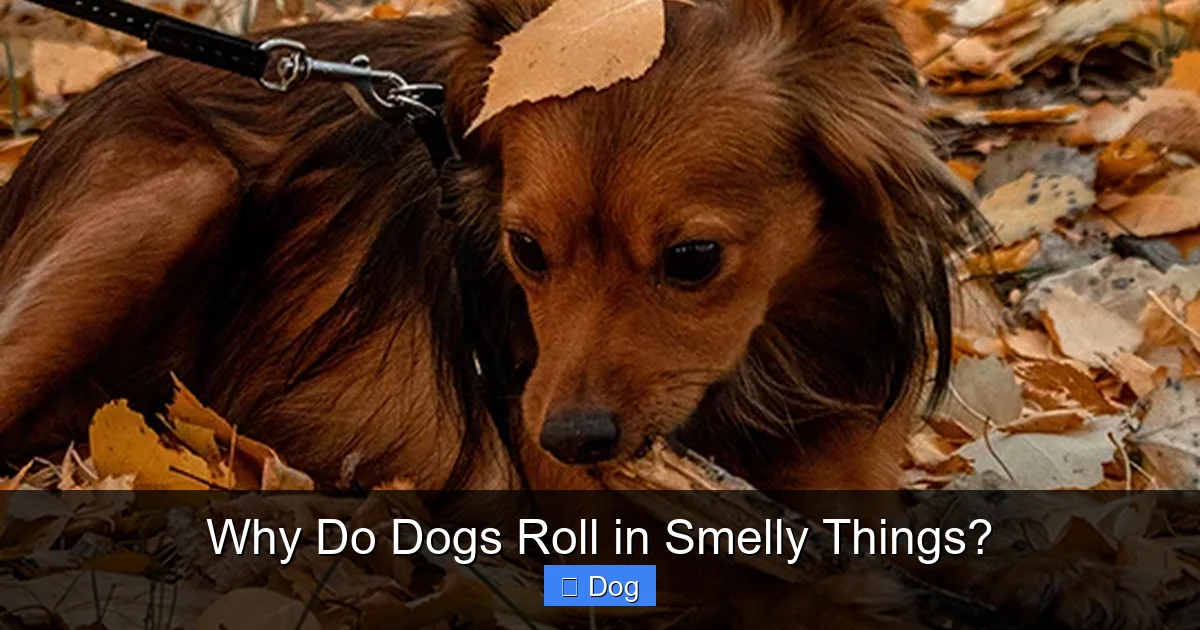
Have you ever watched your beloved canine companion enthusiastically dive into something absolutely repulsive, then emerge with a look of pure bliss? Why do dogs roll in smelly things? This common, albeit gross, behavior stems from a fascinating mix of instinctual drives, including a primal desire to cloak their scent for hunting, a unique way to communicate discoveries with their pack, and even a profound form of sensory enjoyment. Understanding these deep-seated reasons can help us appreciate our dogs’ quirky world.
Every dog owner has been there. You’re enjoying a lovely walk with your furry best friend, maybe soaking in the fresh air and sunshine. Suddenly, your dog’s nose hits the ground, tail wags furiously, and before you can even register what’s happening, they’ve launched themselves into a full-body roll. They thrash, they wiggle, they rub their neck and shoulders with pure, unadulterated joy. And then, they emerge, triumphant and beaming, completely covered in something absolutely, unequivocally disgusting. A dead fish. A pile of questionable refuse. Some truly ancient animal droppings. You cringe, you gag, and you ask the age-old question: Why do dogs roll in smelly things?
It’s a perplexing, often frustrating, and always smelly habit that leaves us scratching our heads and reaching for the dog shampoo. While it might seem like a deliberate act of defiance or a canine prank to us, this behavior is deeply rooted in your dog’s ancient instincts and their unique way of perceiving the world. It’s not about being naughty; it’s about being a dog. Understanding the underlying reasons can help us not only manage the behavior but also appreciate the fascinating complexity of our canine companions.
Let’s dive into the fascinating world of canine scent and behavior to uncover the mystery behind why dogs find joy in what we find utterly repulsive. From primal hunting instincts to social communication and pure sensory delight, there’s a whole lot more going on than just a desire to stink up your car.
Key Takeaways
- Primal Instinct for Camouflage: Dogs inherited from their wild ancestors the instinct to mask their own scent with stronger, external odors, making them less detectable to prey during hunts.
- Scent as Communication: Rolling in something smelly is a way for a dog to bring an “interesting discovery” back to its pack, sharing information about potential food sources or territorial markers.
- Sensory Enjoyment and Enrichment: What smells repulsive to humans can be highly appealing and stimulating to a dog’s superior sense of smell, providing a rich sensory experience.
- Behavioral Factors: While less common for smell-rolling specifically, behaviors like seeking attention, relieving stress, or boredom can sometimes contribute to a dog’s desire to roll.
- Leave Their Mark: Dogs also roll to deposit their own scent on the object, subtly marking it as something they’ve interacted with or “claimed.”
- Managing the Behavior: Prevention through leash control and distraction is key. If a dog rolls, an immediate bath with appropriate shampoo is necessary, but avoid punishment as it’s an instinctual act.
Quick Answers to Common Questions
Why do dogs roll in poop?
Dogs roll in poop primarily due to a primal instinct to mask their own scent, making them less detectable to prey or other predators. It can also be a way to communicate a significant discovery to their pack or simply because the strong, complex odor is intensely stimulating and pleasurable to their superior sense of smell.
Is it bad for my dog to roll in smelly things?
While rolling in smelly things is a natural behavior, it’s not ideal for hygiene or health. It can transfer bacteria, parasites, or other contaminants to your dog’s fur and then into your home. The main harm is the potential for disease transmission, although often it’s just an unpleasant mess that requires a bath.
How can I stop my dog from rolling in smelly things?
Prevention is key: keep your dog on a leash in areas with known smelly spots, be vigilant for their pre-roll cues, and use distraction techniques with treats or toys. Teaching a strong “leave it” command can also be very effective. Avoid punishment, as it’s an instinctual behavior.
Do dogs roll in smelly things to get attention?
While the primary reasons are instinctual, some dogs might learn that rolling in smelly things gets them immediate attention, even if it’s negative (like you yelling or chasing them for a bath). If a dog is bored or attention-seeking, this learned association can reinforce the behavior.
What should I do if my dog rolls in something gross?
The best course of action is an immediate bath using a good quality dog shampoo, preferably one designed for deodorizing. Thoroughly wash the affected areas, and check for any lingering debris. Do not punish your dog, as it’s a natural behavior.
📑 Table of Contents
The Scent Cloaking Theory: A Primal Instinct
One of the most widely accepted theories for why dogs roll in smelly things harks back to their wild ancestors: wolves, coyotes, and other canids. For these animals, survival depended on successful hunting, and scent played a crucial role in both finding and ambushing prey.
Hunting Advantage: Masking Their Own Scent
Imagine a wolf stalking a deer. The deer has a keen sense of smell, and the wolf’s natural scent could easily give it away. But what if the wolf could mask its own smell? By rolling in the pungent remains of another animal, or even strong-smelling vegetation or dung, a wild canid could effectively camouflage its personal odor. This “scent cloaking” would allow it to get closer to unsuspecting prey without being detected, significantly increasing its chances of a successful hunt. It’s a natural form of biological camouflage.
Our domestic dogs, despite living pampered lives in our homes, carry these ancient instincts within their DNA. While your fluffy golden retriever might not be hunting a deer for its next meal, the urge to mask its own scent by rolling in something smelly is still very much alive. It’s an evolutionary leftover, a primal software program running in the background, even if the original “hunt for survival” context is long gone. When your dog rolls in a dead squirrel, they’re not thinking, “This will help me catch dinner.” They’re simply responding to a deep-seated, instinctual drive to utilize strong external scents.
The Surprise Factor
Beyond simply masking their scent, rolling in something particularly strong and unfamiliar might also be about creating a “surprise” element. If a dog smells like a decaying carcass or another animal, it could potentially confuse or even momentarily deter smaller prey animals, giving the dog a split-second advantage. Or, it could make the prey think the dog is *something else* entirely, not a predator. This element of deception would have been incredibly valuable in the wild, contributing to the survival of individuals who engaged in this behavior. So, when your dog rolls in smelly things, they are, in a way, embodying a stealthy hunter.
A Form of Communication: “Look What I Found!”
Dogs are incredibly social animals, and much of their communication revolves around scent. They sniff each other to gather information, they mark territory with urine, and they rub against things to leave their own olfactory signatures. Rolling in smelly things can also be interpreted as a form of communication, a way to share information with their social group.
Visual guide about Why Do Dogs Roll in Smelly Things?
Image source: supernutritious.net
Sharing Information with the Pack
Think of it like a newspaper or a social media post for dogs. In a pack environment, a dog who discovers something interesting or important – a potential food source, a rival pack’s marking, or a novel smell – might roll in it to pick up the scent. When they return to the pack, the other dogs would immediately notice the new, strong odor on their packmate. This shared scent would signal, “Hey everyone, I found something significant out there! Let me tell you all about it.”
By bringing these strong scents back, the dog provides valuable information to the rest of the pack without having to lead them directly to the source. It’s an efficient and highly effective way of sharing environmental data. So, when your dog rolls in smelly things like that particularly pungent puddle, they might be broadcasting a message to you (their pack) about their exciting discovery, even if your only response is a groan and a hose.
Social Status and Storytelling
Some ethologists suggest that bringing back a strong scent might even contribute to a dog’s social status within the pack. The dog who consistently brings back “news” in the form of interesting smells might be seen as a valuable explorer or information gatherer. It’s a way for them to “tell a story” about their adventures and discoveries to their family, even if that story involves something truly foul. The dog might not consciously aim to gain status, but the positive reinforcement of attention (even if it’s negative attention from us) can reinforce the behavior.
Just Because It Smells Good (to Them!): Sensory Enjoyment
This theory is often the hardest for us humans to grasp, because what we find repulsive, our dogs seem to find utterly delightful. Our olfactory world is vastly different from theirs, and what they experience through their noses is incredibly rich and complex.
The Appeal of Strong Aromas
Dogs possess an extraordinary sense of smell – estimated to be 10,000 to 100,000 times more acute than a human’s. Their noses are designed to detect, analyze, and revel in odors. What we perceive as a decaying carcass or a foul-smelling pile of feces, a dog might perceive as a complex bouquet of fascinating chemicals, each telling a detailed story. It’s not just “gross” to them; it’s an intricate symphony of scents that provides immense sensory stimulation.
For a dog, rolling in something with a strong, intriguing smell is akin to a human enjoying a fine meal, listening to a beautiful piece of music, or experiencing a captivating piece of art. It’s an intense sensory experience that can be deeply pleasurable and enriching. It engages their primary sense in a profound way. When your dog rolls in smelly things, they are often simply indulging in one of life’s great pleasures from a canine perspective.
Marking Their Scent on the “Good Stuff”
While dogs pick up the external scent when they roll, they also leave some of their own scent behind. They have scent glands on their neck and shoulders, and when they rub vigorously, they’re not just acquiring a new cologne; they’re also depositing their personal mark on the object. This could be a subtle form of marking or “claiming” something they find particularly interesting or valuable. “This amazing smell is mine, and I’ve been here!” It’s another layer to their complex olfactory communication and self-expression.
Anxiety, Attention, or Boredom: Behavioral Factors
While the primary drivers for rolling in smelly things are usually instinctual and sensory, sometimes behavioral factors can play a secondary role, especially if the behavior seems excessive or out of character.
A Stress Reliever
In some cases, dogs might engage in certain behaviors as a way to cope with stress or anxiety. While it’s less common for specific “smelly rolling” to be solely stress-induced, if a dog is generally anxious, they might engage in compulsive or repetitive behaviors, and rolling could potentially be one of them. However, it’s more likely that a dog rolling in something truly pungent is acting on instinct rather than stress, unless there are other clear signs of anxiety present.
Seeking Attention (Negative or Positive)
Dogs are smart and learn quickly. If your dog has learned that every time they roll in something smelly, they get immediate, intense attention from you (even if it’s you yelling and chasing them for a bath), they might associate the act with getting a reaction. For some dogs, any attention is better than no attention. If they are feeling ignored or bored, a quick roll in something awful might be a surefire way to get you to notice them. This is a learned behavior, rather than an instinct, but it can certainly reinforce the act of rolling in smelly things.
Lack of Stimulation/Boredom
A bored dog is often a mischievous dog. If a dog isn’t getting enough mental and physical exercise, they might seek out their own entertainment. Discovering a particularly fascinating (to them) and smelly patch could be an exciting adventure in an otherwise monotonous day. The thrill of the discovery, the sensory explosion, and the subsequent “story” they get to share can all contribute to a bored dog engaging in this behavior. Ensuring your dog gets plenty of enrichment can sometimes reduce the frequency of such undesirable acts.
Managing the Smelly Roller: Tips for Pet Parents
While understanding why dogs roll in smelly things helps us appreciate their nature, it doesn’t make the aftermath any less unpleasant. Here are some practical tips for managing this quirky canine habit.
Prevention is Key
- Leash Control: The easiest way to prevent your dog from rolling in something disgusting is to keep them on a leash in areas where such “treasures” might be found. This gives you immediate control to steer them away.
- Vigilance: Pay close attention to your dog during walks. Learn their pre-roll cues: a sudden stop, an intense sniff with nose glued to the ground, frantic tail wags, or a quick crouch before the dive. Intercept them before they commit.
- Distraction: If you spot something vile before your dog does, or if they’re starting their pre-roll dance, quickly distract them. Use a high-value treat, a favorite squeaky toy, or a cheerful command like “Let’s go!” to redirect their attention away from the offensive object.
- “Leave It” Command: Teach your dog a solid “leave it” command. This can be a lifesaver, allowing you to tell them to ignore something appealing (to them) on the ground.
The Aftermath: Dealing with the Smell
- Immediate Bath: Once the deed is done, there’s usually only one solution: a bath. Use a good quality dog shampoo, preferably one designed for deodorizing. Several washes might be needed for particularly stubborn odors.
- Don’t Punish: While it’s tempting to get angry, remember that rolling in smelly things is an instinctual behavior for your dog. Punishment won’t stop the instinct and can damage your bond and make your dog fearful. Instead, calmly but firmly lead them to the bath.
- Check for Residue: After the bath, thoroughly check your dog’s fur, especially around the neck, ears, and shoulders, for any lingering bits of whatever they rolled in.
- Odor Neutralizers: For smells that seem to linger on your dog’s skin even after a bath, consult your vet or groomer about specialized odor-neutralizing shampoos or sprays.
Embrace the Quirks (to an Extent)
Ultimately, understanding why dogs roll in smelly things means accepting that it’s a deeply ingrained part of their canine nature. While we can take steps to prevent it, we probably can’t eliminate it entirely. It’s one of those charming, albeit gross, quirks that makes our dogs who they are. Learning to laugh (after the bath, of course) and appreciate the wild, untamed spirit within our domesticated companions can make these moments a little less frustrating and a little more endearing.
Conclusion
The mystery of why dogs roll in smelly things is not so mysterious after all, once we view the world through their incredibly powerful noses and ancient instincts. Whether it’s to cloak their scent for an imagined hunt, to communicate an exciting discovery to their pack, or simply to indulge in a profound sensory pleasure, this behavior is a testament to the rich, complex inner lives of our canine friends. While it often leads to a mandatory bath and a test of our patience, it’s a reminder that beneath the pampered housepet lies a creature deeply connected to its wild heritage.
So, the next time your dog emerges from a particularly pungent patch, looking utterly delighted with themselves, take a deep breath (away from them, perhaps!). Remember the fascinating reasons behind their actions. It’s not about being naughty; it’s about being a dog, embracing their unique world of smells, and living out ancient instincts. And sometimes, that just means a little extra scrub time in the tub for our beloved, wonderfully weird, and gloriously stinky companions.
🎥 Related Video: Why Do Dogs Roll in Smelly Stuff? | Dogs Rolling in Poop & Dead Animals
📺 Dog Psychology 101
Why Do Dogs Roll in Smelly Stuff? | Dogs Rolling in Poop & Dead Animals Surely you’ve seen a dog, possibly even your own, roll …
Frequently Asked Questions
Why do dogs love gross smells so much?
Dogs have an incredibly powerful sense of smell, vastly superior to humans. What we perceive as foul, they experience as a rich, complex tapestry of fascinating chemicals and information. These strong aromas provide intense sensory stimulation and enjoyment for them, engaging their primary sense.
Is rolling in smelly things a sign of a health problem?
Generally, rolling in smelly things is a normal, instinctual dog behavior and not a direct sign of a health problem. However, if your dog suddenly starts this behavior excessively, or if it’s accompanied by other unusual actions, it’s always wise to consult your vet to rule out any underlying issues or anxiety.
Do all dogs roll in smelly things?
While the instinct is present in most dogs, not all dogs engage in rolling in smelly things to the same extent. Some dogs might do it frequently, others rarely, and some almost never. Factors like breed, individual personality, environment, and scent availability can all influence how often a dog exhibits this behavior.
Can rolling in smelly things be dangerous for my dog?
It can be. If the smelly thing contains toxins, harmful bacteria, parasites, or sharp objects, rolling in it could expose your dog to health risks. Always supervise your dog and prevent them from rolling in unknown or potentially hazardous substances.
Why do dogs roll on their backs when they roll in something smelly?
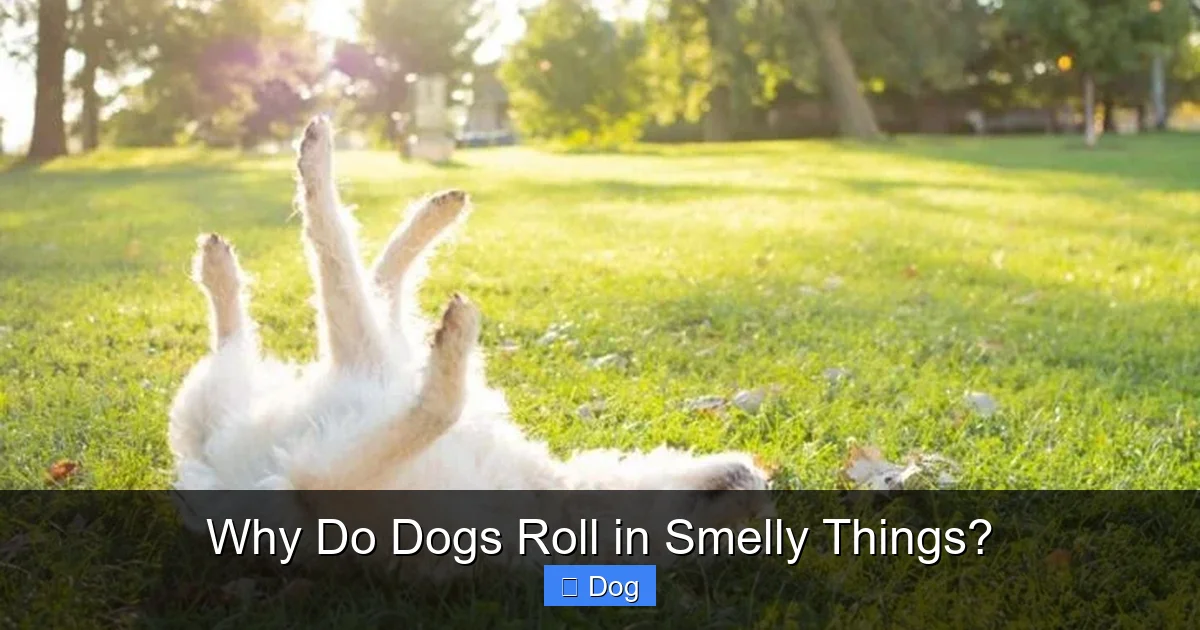
When dogs roll on their backs or sides in something smelly, they are strategically trying to cover as much of their body as possible with the scent. They often target areas like their neck, shoulders, and back, which are easy to rub against the ground and effectively transfer the potent odor. This ensures maximum “scent cloaking” or “scent carrying.”
How can I make my dog smell better after they roll in something gross?
An immediate and thorough bath with a quality dog shampoo is essential. For particularly stubborn odors, a deodorizing shampoo designed for pets can be very effective. Sometimes, more than one wash is needed. You can also follow up with a dog-safe conditioning spray that helps neutralize odors and keep their coat fresh.