
When a dog licks your face, it’s typically a sign of affection, an instinctual behavior, or a bid for attention. Rooted in puppyhood grooming and appeasement, this common canine gesture conveys their feelings and connection with you. Understanding your dog’s full body language alongside the lick helps decipher its true meaning, fostering a deeper bond.
What Does It Mean When a Dog Licks Your Face?
It’s a universal experience for dog owners: that warm, wet, enthusiastic “kiss” delivered directly to your face by your furry best friend. One moment you’re relaxing on the couch, the next your dog is showering you with sloppy, happy licks. It’s often seen as a pure expression of love, and for good reason! Many of us affectionately call them “dog kisses.”
But have you ever paused to wonder, “What does it *really* mean when a dog licks your face?” Is it always about love? Or could there be other messages hidden behind those insistent licks? The truth is, this common canine behavior is a fascinating blend of instinct, communication, affection, and even a bit of opportunism. Understanding these nuances can deepen your bond with your dog and help you interpret their unique language.
So, let’s dive into the delightful, sometimes damp, world of canine face-licking. We’ll explore the various reasons behind this beloved behavior, how to read the subtle cues that accompany it, and what to do if your dog’s licks become a little too enthusiastic. Get ready to gain a deeper insight into your dog’s affectionate gestures!
Key Takeaways
- A Sign of Affection and Bonding: Licking is a primary way dogs express love, comfort, and social connection, often releasing “feel-good” hormones like oxytocin.
- Rooted in Instinct and Puppyhood: This behavior traces back to canine ancestors and puppyhood, where mothers groom their pups, and pups lick to solicit food or show appeasement.
- Seeking Your Attention: Dogs quickly learn that licking often elicits a reaction from humans, making it a powerful tool for getting your focus, whether for play, food, or affection.
- The Allure of Your Taste: Your skin naturally carries traces of salt, moisture, and unique scents, making your face an interesting and appealing sensory experience for a dog.
- Context is Key: To truly understand why a dog licks your face, always observe their accompanying body language. A relaxed posture, soft eyes, and wagging tail indicate happiness, while stiffness or avoidance might suggest stress.
- Excessive Licking May Signal a Problem: If your dog’s face licking becomes sudden, obsessive, or accompanied by other behavioral changes, it could indicate underlying anxiety, boredom, or even a medical issue that warrants a vet visit.
- Embrace or Gently Redirect: While most face licking is harmless and endearing, you can gently redirect the behavior if it becomes too much, teaching boundaries without discouraging their affection.
Quick Answers to Common Questions
Is it bad if my dog licks my face?
Generally, no. For healthy individuals, occasional dog licks are not harmful. However, it’s a good practice to wash your face afterward, especially if you have any open cuts or immune system concerns.
Do dog licks mean “I love you”?
Yes, often! While there are multiple reasons, affection and bonding are primary motivators for a dog to lick your face. It’s a common way they express love and connection.
Why does my dog lick my face when I cry?
Dogs are highly empathetic. When you cry, they may be reacting to your distress, trying to comfort you, or seeking to understand what’s wrong through taste and smell. It’s often an attempt to provide reassurance.
My dog licks my face excessively. Should I be concerned?
Excessive or sudden obsessive licking can sometimes be a sign of underlying anxiety, boredom, or a medical issue. If it’s a new behavior or seems compulsive, consulting a vet or professional trainer is recommended to rule out problems.
How can I stop my dog from licking my face if I don’t like it?
You can gently redirect the behavior. When your dog attempts to lick your face, calmly move your head away, stand up, or offer them a toy instead. Reward them when they show affection in other, more desirable ways.
📑 Table of Contents
More Than Just a Kiss: The Many Meanings of a Dog’s Lick
A dog’s lick, often aimed directly at your face, is far more complex than just a simple “kiss.” It’s a rich form of communication rooted in their evolutionary history and social structure. From the moment they are born, licking plays a vital role in a dog’s life, and this behavior continues into adulthood, adapting to their interactions with humans.
Think about it: dogs can’t speak our language, so they rely on a sophisticated system of body language, vocalizations, and physical contact to express themselves. Licking is a prominent part of this system. When your dog licks your face, they are sending you a message, and understanding that message is key to building an even stronger relationship. It could be an expression of joy, a plea for attention, a sign of respect, or even an attempt to gather information about your mood or surroundings. Let’s unpack the primary reasons your dog might be showering your face with licks.
Decoding the Lick: Primary Reasons Why Your Dog Licks Your Face
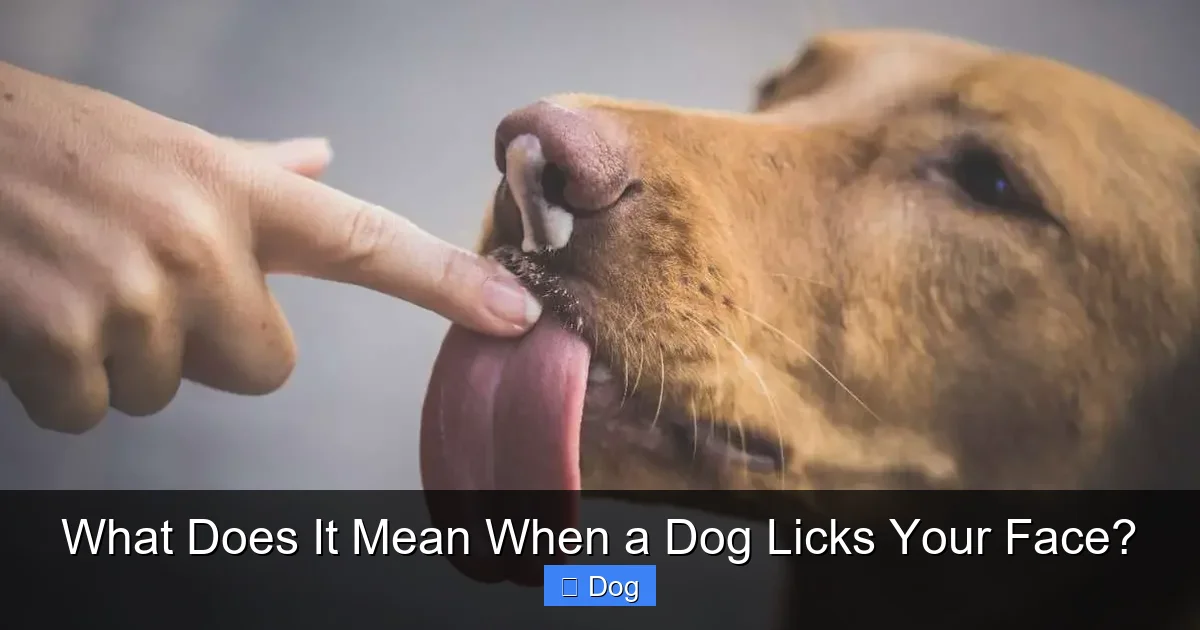
Visual guide about What Does It Mean When a Dog Licks Your Face?
Image source: dogshowtv.com
When your dog’s tongue makes contact with your skin, it’s not just a random act. There are several key motivations behind this behavior. Each reason offers a window into your dog’s inner world and their relationship with you.
A Sign of Affection and Bonding
This is probably the most widely accepted and heartwarming reason. Just like humans hug or kiss, dogs use licking to show love, comfort, and establish social bonds. When a dog licks your face, it can be a genuine expression of their strong attachment to you. This behavior often releases oxytocin, a “feel-good” hormone, in both dogs and humans, reinforcing the positive emotional connection. It’s their way of saying, “I love you,” “You’re my family,” or “I feel safe and happy with you.” This is especially true if the licks are accompanied by a relaxed posture, soft eyes, and a gently wagging tail.
Instinctive Behavior: Puppy Days and Beyond
The roots of face licking run deep into canine instinct.
- Maternal Grooming: It starts in puppyhood. Mother dogs lick their newborn pups to clean them, stimulate breathing, and encourage elimination. This early experience links licking with care, comfort, and survival.
- Soliciting Food: As puppies grow, they learn to lick their mother’s muzzle to encourage her to regurgitate food for them. This behavior, known as “soliciting,” is a natural part of their development and can carry over into adulthood, albeit in a modified form. Your face might be the nearest “muzzle” to lick.
- Appeasement and Submission: In a pack hierarchy, a lower-ranking dog might lick the face of a higher-ranking dog as a sign of respect, appeasement, or to diffuse tension. When your dog licks your face, especially with a slightly lowered head or soft gaze, it can be a gesture of acknowledging your leadership and showing they mean no harm.
Seeking Attention (and Reinforcement)
Dogs are incredibly smart and quick learners, especially when it comes to getting what they want from their humans. If every time your dog licks your face, you respond—even if it’s just a giggle, a gentle push away, or saying “no”—they’re receiving attention. For a dog, *any* attention is often good attention.
They quickly learn that face licking is a highly effective way to get you to notice them. This could be because they want to play, need to go outside, are hungry, or simply desire some petting and interaction. If you consistently react to their licks, you are inadvertently reinforcing the behavior, making them more likely to do it again.
The Allure of Your Skin’s Taste
Let’s be honest: humans taste interesting! Our skin carries natural salts, moisture, and a unique array of scents from our sweat, lotions, and daily activities. For a dog, whose sense of smell and taste is vastly superior to ours, your face is a sensory buffet. They might be drawn to the salty taste of your skin, especially after you’ve been exercising or just existing in humid weather. It’s also a way for them to “taste” and gather information about you and your environment.
Simply Exploring Their World
Dogs explore their world primarily through their noses and mouths. Just as they might sniff every lamppost or mouth a new toy, they use their tongues to explore new textures, tastes, and smells. Licking your face can simply be another form of sensory exploration, a way for them to understand their environment and the important people within it. They might be “checking in” with you, gathering information about where you’ve been, or what you’ve eaten.
Beyond the Lick: Reading Your Dog’s Full Body Language
While understanding the reasons behind face licking is important, the true meaning often lies in the context of your dog’s overall body language. A lick is just one piece of the communication puzzle. By paying attention to their posture, tail, ears, and eyes, you can gain a much clearer picture of what your dog is trying to tell you.
Happy and Relaxed Licks
When your dog licks your face out of happiness or affection, you’ll typically see these accompanying signs:
- Loose Body: Their muscles will be relaxed, not stiff or tense.
- Wagging Tail: A relaxed, sweeping wag (not a stiff, rapid one) usually indicates joy.
- Soft Eyes: Their eyes will be soft, perhaps slightly squinted, without a hard stare or darting pupils.
- Relaxed Ears: Ears will be in their natural position, not pinned back or stiffly alert.
- Play Bows: They might initiate a play bow before or after licking, indicating a desire to play.
This combination tells you your dog is feeling content, affectionate, and enjoying their interaction with you.
Anxious or Stressed Licks
Sometimes, excessive licking can be a sign of anxiety, stress, or even compulsive behavior. If the licking is accompanied by these cues, your dog might be feeling uncomfortable:
- Stiff Body: A tense, rigid posture, sometimes accompanied by crouching.
- Lip Licking (non-face licking): Rapid licks of their own lips, yawning (when not tired), or turning their head away are common signs of stress or discomfort.
- Tucked Tail: A tail held low or tucked between their legs.
- Darting Eyes or “Whale Eye”: Showing the whites of their eyes.
- Ears Pinned Back: Flattened against their head.
- Avoidance: Trying to retreat or hide after licking.
- Panting: Even when not overheated.
If you observe these signs, your dog might be trying to appease you, show submission, or self-soothe due to anxiety. It’s important to identify the stressor and help them feel more secure.
Over-Excited Licks
Some dogs, especially puppies and high-energy breeds, might lick your face out of sheer over-excitement. This often happens when you first arrive home or during an intense play session.
- Frantic Energy: Jumping, spinning, and overall high arousal.
- Rapid, Intense Licks: Sometimes accompanied by gentle nipping or mouthing.
- Lack of Focus: It might be hard to get their attention.
While often well-intentioned, this type of licking can sometimes be overwhelming or even accidentally scratch your face. It’s usually a sign that your dog needs help regulating their excitement.
When Licking Becomes Excessive: Is There a Hidden Message?
Most face licking is harmless and part of a normal, healthy dog-human relationship. However, if your dog’s licking becomes constant, obsessive, or is a sudden change in behavior, it might be a sign that something else is going on.
Medical Concerns to Rule Out
While less common for face licking directly, a sudden increase in *any* compulsive behavior, including excessive licking, can sometimes have a medical root. It’s always a good idea to consult your veterinarian if you notice a significant or sudden change in your dog’s behavior. They can rule out underlying issues such as:
- Pain or Discomfort: Sometimes, animals lick excessively to cope with pain, even if it’s not directly where the pain is located.
- Allergies or Skin Irritations: While often focused on their own bodies, general discomfort can manifest as anxiety that leads to excessive licking.
- Neurological Issues: In rare cases, neurological conditions can cause compulsive behaviors.
A vet check-up can provide peace of mind or identify any treatable health problems.
Behavioral Causes for Over-Licking
More often, excessive face licking stems from behavioral issues:
- Anxiety and Stress: Licking can be a self-soothing mechanism for dogs. If your dog is feeling anxious, bored, or stressed, they might lick excessively to calm themselves down. This can be triggered by changes in routine, separation anxiety, loud noises, or new environments.
- Boredom: A dog who isn’t getting enough mental stimulation or physical exercise might turn to compulsive behaviors, including licking, to occupy themselves.
- Learned Behavior: As mentioned before, if excessive licking consistently gets a reaction (even negative attention), the behavior can become ingrained.
- Compulsive Disorder: In some cases, persistent, repetitive licking can develop into a true compulsive disorder, similar to OCD in humans. This usually requires intervention from a professional dog behaviorist.
Managing Excessive Licking
If you suspect the licking is excessive or problematic, here are some steps you can take:
- Increase Exercise and Mental Stimulation: A tired dog is often a well-behaved dog. Ensure your dog gets enough physical activity and mental challenges through puzzle toys, training sessions, and new experiences.
- Identify and Address Stressors: Try to pinpoint what might be causing your dog anxiety and work to reduce or manage those triggers.
- Teach an Alternative Behavior: Instead of reacting to licks, try to redirect them. When your dog starts to lick, ask for a “sit” or “down,” and reward them for that calm behavior.
- Consult a Professional: If you’re struggling to manage excessive licking, a certified professional dog trainer or veterinary behaviorist can provide tailored strategies and help identify underlying issues.
Enjoying the Bond: Tips for You and Your Licking Companion
For most dog owners, a little face licking is a welcome part of the relationship. It’s a messy but endearing testament to the love our dogs have for us. Here’s how to navigate this common behavior, appreciating the gesture while maintaining comfort and hygiene.
Embracing the Connection
For many, the occasional face lick is a cherished form of affection. It’s a unique aspect of the human-dog bond that speaks volumes about their devotion.
- Accept It with Love: If you don’t mind a few licks, embrace them as the loving gestures they are. Acknowledge your dog with a gentle pet or a soft word, reinforcing the positive interaction.
- Understand the Intent: Remember, it’s almost always well-intentioned. Your dog isn’t trying to annoy you; they’re communicating in the best way they know how.
Gentle Redirection Techniques
If you find the licking a bit too much, or if you prefer to avoid it for hygiene reasons, you can gently redirect your dog without making them feel rejected.
- Offer an Alternative: When your dog approaches for a face lick, gently offer them a favorite toy instead. This redirects their energy and attention to an appropriate object.
- Move Your Head or Stand Up: Simply turning your head away or calmly standing up can signal to your dog that the “licking session” is over. Avoid pushing them away harshly, which could be confusing or upsetting.
- Teach a “Kiss” Command: You can teach your dog to give kisses on command, perhaps on your hand or cheek, and then transition them to stop when you give another cue like “enough.” This gives you control over *when* and *where* the licking happens.
- Positive Reinforcement for Non-Licking: Reward your dog with praise or a treat when they show affection in other ways, like nudging your hand or resting their head on your lap, especially if they are usually a licker.
Maintaining Hygiene and Safety
While generally safe, there are a few considerations regarding hygiene and dog licks.
- Wash Your Face: After a good slobber session, a quick wash of your face is always a good idea, especially before eating or touching your eyes.
- Be Mindful of Open Wounds: Avoid letting your dog lick any open cuts or scrapes on your face, as dog saliva can contain bacteria.
- Allergies: If you have allergies, excessive face licking might trigger a reaction. In such cases, gentle redirection is particularly important.
In conclusion, when a dog licks your face, they are offering a multifaceted message of affection, instinct, and communication. It’s a powerful reminder of the deep, unspoken bond we share with our canine companions. By understanding the various meanings behind those wet, wonderful licks and by observing their accompanying body language, you can truly appreciate this unique form of canine expression. Embrace the love, understand the message, and continue building that incredible connection with your best friend.
🎥 Related Video: Why Does My DOG LICK My FACE? 🐶👅🧑🏻 (5 Reasons)
📺 AnimalWised
Many of us will have no problem letting our dog lick our face, but sometimes the impulse behind this behavior is poorly understood …
Frequently Asked Questions
Is it true that a dog’s mouth is cleaner than a human’s?
No, this is a common myth. A dog’s mouth contains a vast array of bacteria, some of which are unique to canines and others that can be shared with humans. While generally not harmful with casual contact, it’s not “cleaner.”
Why do some dogs lick faces more than others?
The frequency of face licking can depend on individual dog personality, breed tendencies (some are naturally more “mouthy”), early life experiences, and how much the behavior has been reinforced by human reactions. Some dogs are simply more affectionate or attention-seeking through licking.
Does a dog licking my face mean I taste good to them?
Yes, in a way! Your skin contains natural salts, moisture, and unique scents from sweat and lotions, which can be very appealing and interesting to a dog’s highly sensitive tongue and nose. They are literally “tasting” you.
Can a dog licking my face spread diseases?
The risk of disease transmission from a healthy dog’s casual face lick to a healthy human is generally very low. However, dog saliva can carry bacteria, and it’s always wise to avoid allowing licking of open wounds and to maintain good hygiene, especially for individuals with compromised immune systems.
Why does my dog lick my face after I’ve eaten?
After you’ve eaten, your face might have lingering scents or tiny food particles that are irresistible to your dog’s keen sense of smell. They might be trying to “clean up” or simply trying to get a taste of whatever deliciousness you’ve consumed.
Is it possible for a dog to lick my face to comfort me?
Absolutely. Dogs are highly attuned to human emotions and often respond with comforting behaviors when they sense their human is distressed. Licking can be a self-soothing gesture for them, but it also serves as a way to show empathy and offer reassurance to you.